Films
Documentary, science films, public engagement films, archive-led films, interviews, educational explainers and carefully structured visual stories.
Films, objects and interactive systems for complex material
Matter & Motion is the home of Glasgow based producer Bevis Evans-Teush. I create films, objects and interactive systems for science, culture and public engagement.
Matter & Motion turns complex material into films, objects and interactive systems that people can explore. It grows out of more than 20 years of film production, documentary, science communication and archive-led work, and extends that experience into physical storytelling, interactive systems and AI-assisted editorial tools.
What I make
Documentary, science films, public engagement films, archive-led films, interviews, educational explainers and carefully structured visual stories.
Light tables, transparency systems, kinetic objects, physical interfaces, mechanical storytelling devices, dioramas and tactile public engagement formats.
AI-assisted archives, conversational guides, explorable media, browser-based tools, installation interfaces and live public engagement systems.
Featured work
These cards are draft case-study entries for the first public version of the site. They show how complex material can move between screen, object, installation and interaction.
Case study / experiment
A chorus of difficult flowers.
What if a flowerbed thought it was a chorus line?
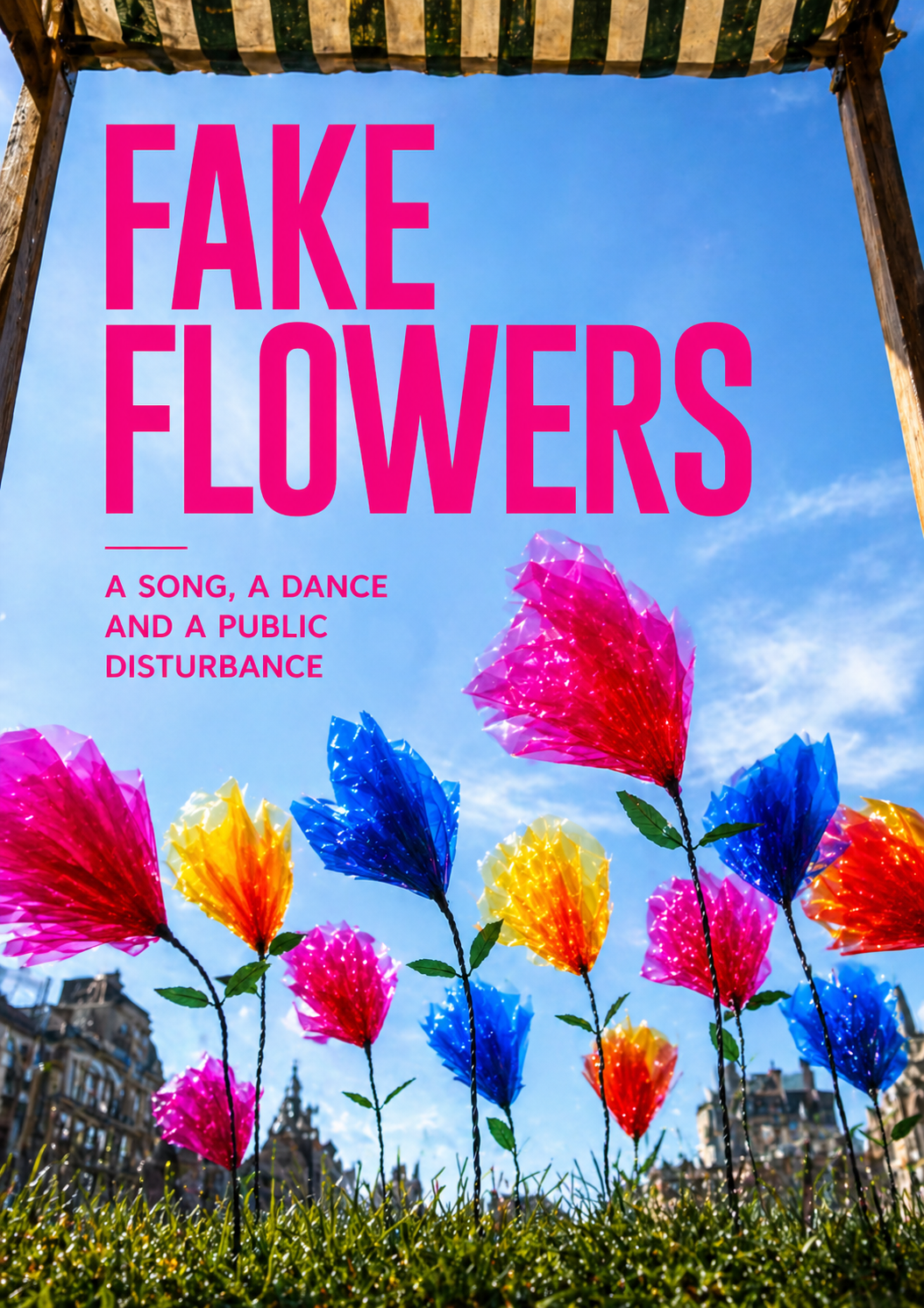
The Flower Show is a kinetic street-theatre installation: a bed of mechanical flowers that rehearse, bicker, listen and perform. Stuck together in one flowerbed, they have songs, moves and fragile egos. Speak to them or sing to them and they respond through movement - each flower dancing in its own way.
Beneath the comedy is a practical performance system. Small servos drive flexible stems; local sound analysis listens for voices, rhythm and silence; a choreography engine gives each flower its own temperament. Some are nervous, some are bossy, some show off, some lag behind. Together they become a tiny performing ensemble.
The project explores how responsive machines can hold attention in public space - not as screens, gadgets or robots pretending to be human, but as physical objects with timing, character and a reason to perform.
Simulation to performance
The project can be developed in software before it moves into the real world. A simulation lets the choreography be tuned early: stem lag, elastic recovery, overshoot, damping, group timing and individual flower temperament can all be tested before the hardware is final.
That matters because the comedy is physical. The flower head should arrive late, wobble, correct itself and settle. By rehearsing those dynamics in software, the final rig can be treated less like a set of motors and more like a small performing ensemble.
They've got songs. They've got moves. They've noticed you.
The invitation is deliberately simple: sing to them. People can also speak, conduct, clap, encourage or interrupt. The flowers answer with bows, sways, twitches, freezes, choral fragments and tiny non-verbal voices.
As screen-based images and voices become easier to generate, live physical presence becomes more valuable. The Flower Show moves responsive behaviour into a public object: authored, mechanical, social and built to gather people around it.
Media studies
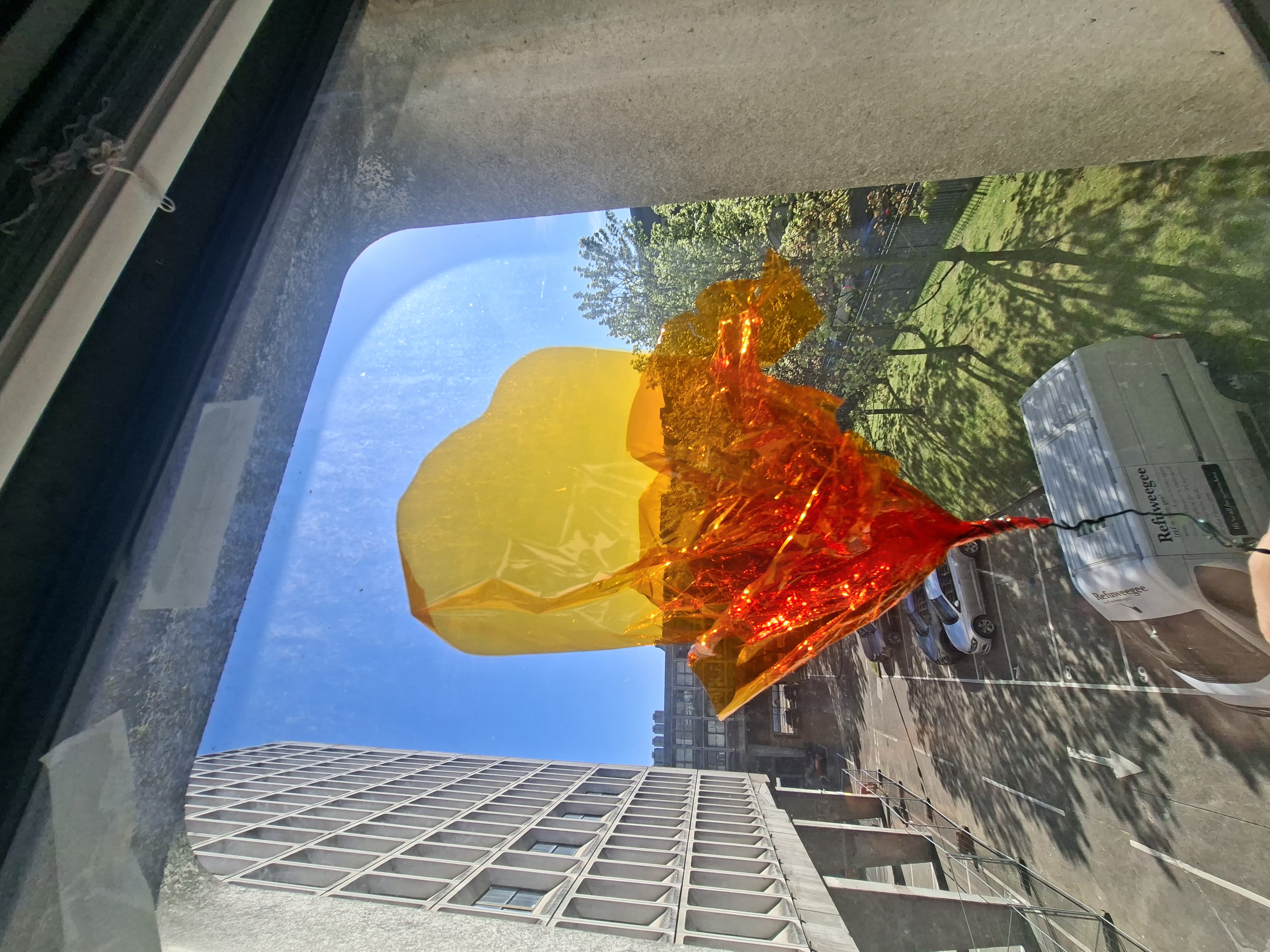
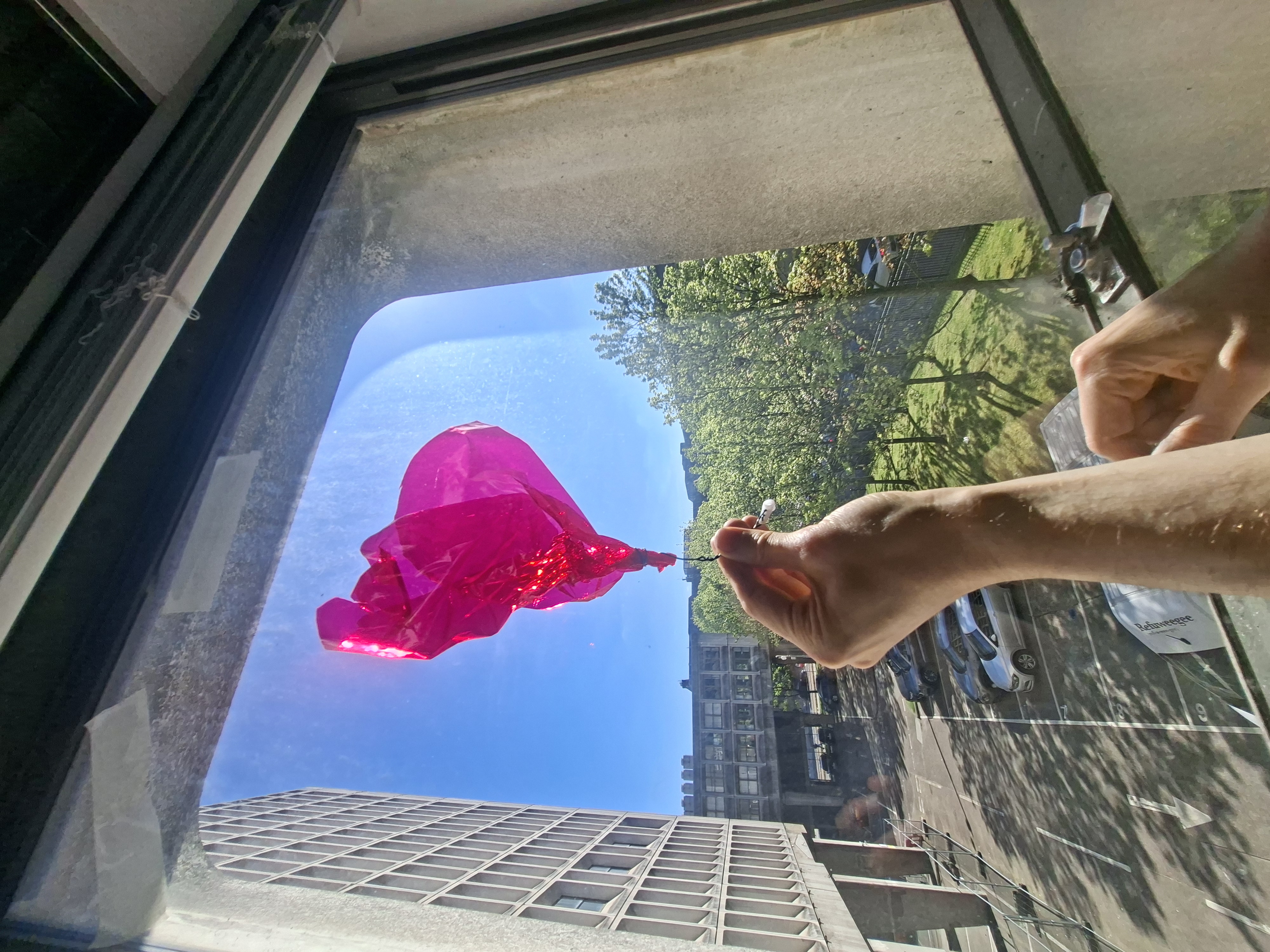
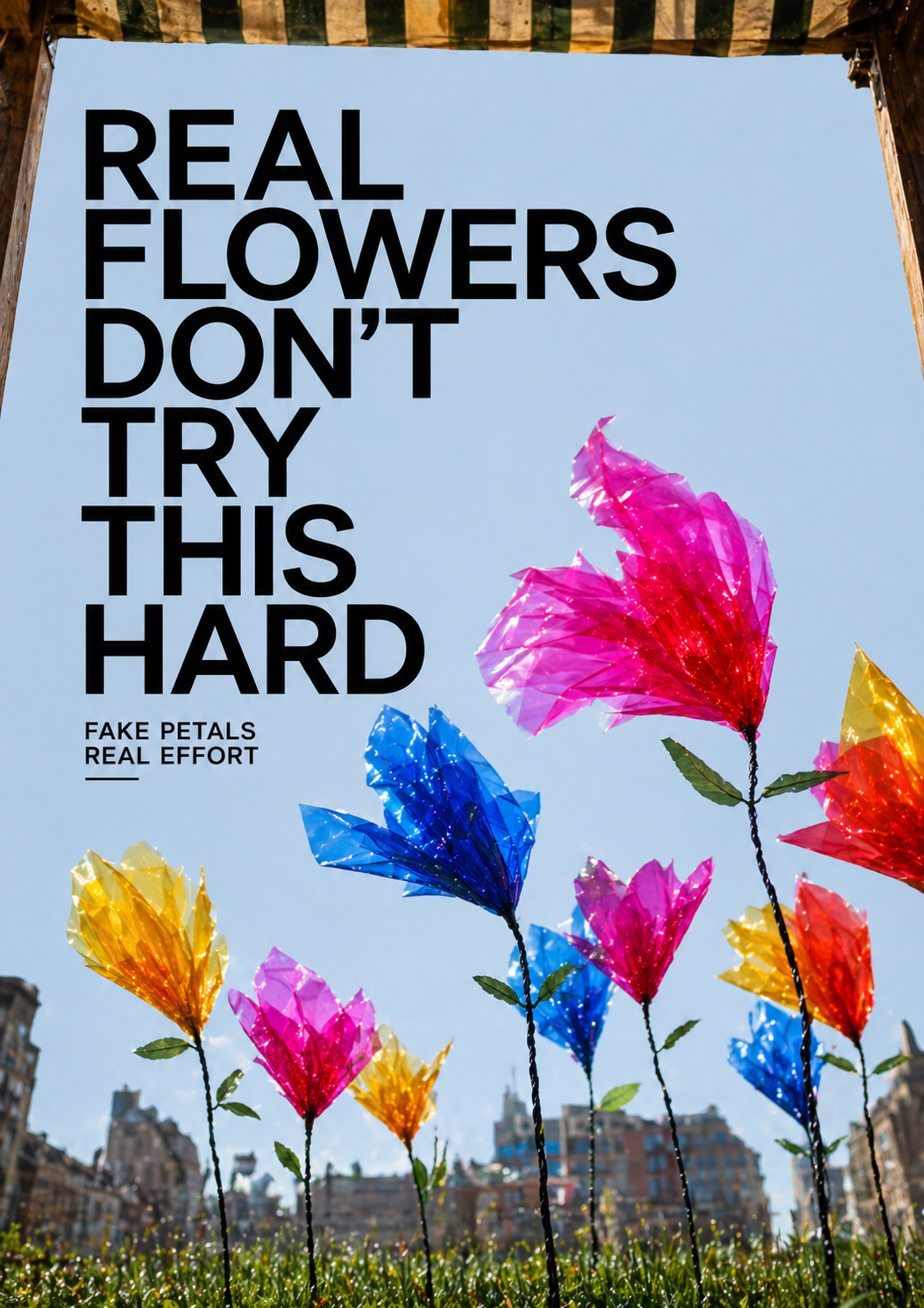
These are working visuals, not final publicity stills. They begin to show the material world of the project: artificial petals, reflective colour, street context and motion tests.
Experiments
Experiments are working ideas, prototypes and formats being developed for future commissions. They test how film, objects, sound, AI-assisted tools and physical interfaces can create richer encounters with complex material.
Approach
Research, footage, archives, interviews, objects, places and expert knowledge.
Editorial structure, audience journey, format, tone and constraints.
Fast working tests: browser apps, mock-ups, motion studies, light-table trials and interaction tests.
Film, interface, object, installation, sound, graphics, physical control and public use.
Documentation, handover, exports, installation thinking and future update paths.
Why now
Screens are everywhere. Matter & Motion explores what happens when stories, research and archives leave the screen and become things people can handle, trigger, question or gather around.
AI-assisted tools make it possible to prototype faster and organise complex material in new ways. But the aim is not automation for its own sake. The aim is better encounters with difficult, valuable material.
About
Matter & Motion is the studio practice of Glasgow-based producer Bevis Evans-Teush.
My background is in film production, documentary, science communication, interviewing, scripting and editing. Over more than 20 years I have worked with universities, cultural organisations, public agencies and broadcasters to shape complex material into clear, engaging media.
Matter & Motion builds on that experience, extending it into physical storytelling, interactive systems, AI-assisted editorial tools and object-led public engagement.
Matter & Motion grows out of the work of Cairn Production, with a sharper focus on physical, interactive and experimental forms.
Contact
Replace this placeholder email address before publishing.